
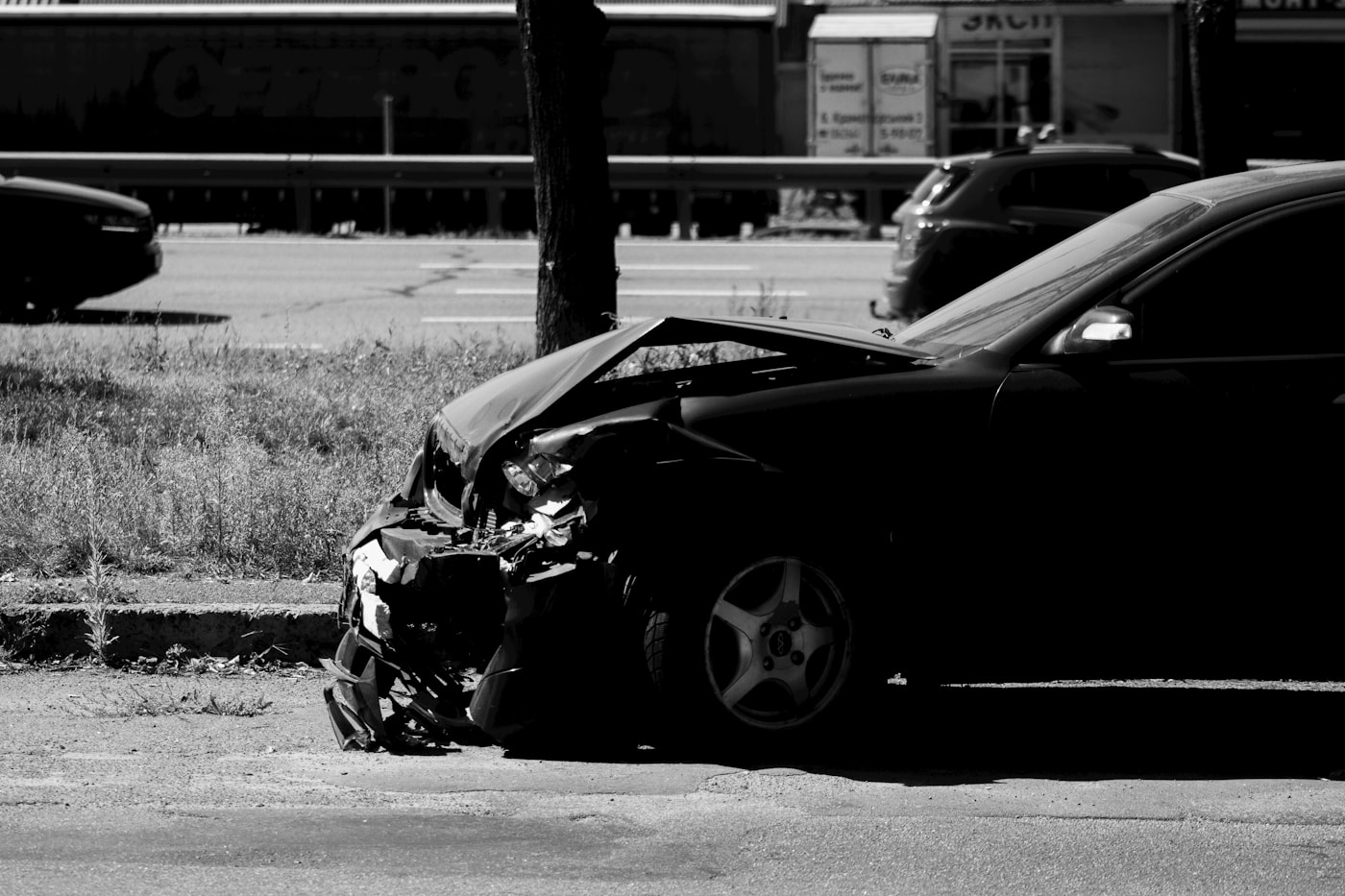
ADAS calibration · Jersey City, NJ
The repair is not finished until the sensors agree.
Lane keeping, adaptive cruise, blind-spot monitoring and automatic emergency braking all read the road through cameras and radar mounted in panels we repair. Move one of them a millimetre and the car still looks perfect — and aims wrong. We calibrate in-house and hand you the report.
Modern cars watch the road with cameras and radar, and those eyes have to be aimed. Aiming them is ADAS calibration — a required step in collision repair, not an add-on. At Waxman in Jersey City we calibrate what the repair disturbed and hand you the report.
What Is ADAS, in Plain Words?
Advanced driver assistance systems are the features that brake, steer or warn without you. The hardware sits all over the body:
- A camera behind the windshield — lane keeping, lane departure warning, most automatic emergency braking.
- Radar behind the grille — adaptive cruise, forward collision warning.
- Short-range radar in the rear bumper corners — blind-spot monitoring, cross-traffic alert.
- Cameras in the mirrors, grille and tailgate — surround view, low-speed lane detection.
- Ultrasonic sensors in the bumper covers — parking sensors, reverse braking.
Each reports what it sees relative to where the car believes it is pointed. A fraction of a degree off and the picture it hands the computer is wrong — with no warning light.
Why Does a Small Repair Require Calibration?
A sensor does not have to be damaged for its aim to change. Manufacturers require calibration after work that sounds unrelated to electronics:
- Windshield replacement — the camera moves onto new glass of different thickness and mounting.
- Bumper repair or replacement — radar and the parking and blind-spot sensors sit behind the cover.
- Wheel alignment — calibration is referenced to the thrust line; change one, change the other.
- Suspension or steering work, or anything that alters ride height.
- Any panel, mirror or lamp carrying a sensor — fender, tailgate, grille, mirror housing.
CCC's Crash Course report on industry repair data puts roughly a third of repairable appraisals as now including at least one calibration.
Static vs Dynamic Calibration
Static calibration happens indoors: the car is measured off the wheel centers on a level floor, printed targets go at manufacturer-specified distances, and a factory-level scan tool teaches the sensor where straight ahead is. It needs space and controlled light — a van in a parking lot cannot do it properly.
Dynamic calibration happens on the road: scan tool connected, a technician drives a prescribed route in a set speed range on clearly marked pavement while the system learns. Many cars need both. Your year, model and options decide which — we follow the procedure, not a guess.
What Happens If You Skip It?
Nothing you can see, which is the danger. An uncalibrated system does not switch itself off; it works from a wrong idea of where the road is: braking that reacts late or slams on for a shadow, lane keeping that steers toward the line instead of away, blind-spot alerts that miss the car beside you. A safety issue, not a formality.
How Much Does ADAS Calibration Cost?
Cost depends on how many systems the repair touched and whether the procedure is static or dynamic. Typical North Jersey ranges:
| Procedure | When it applies | Typical range |
|---|---|---|
| Pre- and post-repair scan | Any electronic repair | $95–$175 |
| Forward camera, dynamic | Windshield or camera service | $200–$350 |
| Forward camera, static | Windshield replacement, most brands | $275–$475 |
| Front radar | Adaptive cruise and AEB | $300–$500 |
| Blind-spot radar, per side | Rear bumper work | $150–$300 |
| Surround-view camera set | Mirror, grille or tailgate work | $400–$700 |
| Several systems, static plus dynamic | Larger collision repair | $700–$1,500 |
Heavy option packages multiply the systems involved; a bad alignment must be corrected first, or the calibration is wasted.
Does Insurance Pay for ADAS Calibration?
Routinely, yes — it is a required operation with a documented manufacturer procedure behind it, exactly what carriers pay for. What surprises owners is the timing: most calibrations never appear on the first estimate. CCC's data shows more than half arrive later, on a supplement, once the car is torn down. That is normal supplement behavior — the insurer pays it and your deductible does not change. We bill the carrier directly, so you never explain ADAS to an adjuster.
Every car in for collision repair gets a scan on intake and a post-repair scan with every required calibration before delivery, and the documentation goes to you. Keep it — it matters at trade-in and in any future claim. Jersey City, Bayonne, Hoboken, Union City, Newark, Kearny, Secaucus, Harrison; open daily 8am-8pm, towing intake around the clock at (551) 325-3030.
Not sure whether your repair needs calibration? Send photos for a free photo estimate and we will tell you the same business day which systems your car carries and what has to be calibrated.
Payment options
Pay over time with Affirm or American First Finance
Paying for the work yourself — a deductible, a repair outside a claim, wheels, film or paint? You can apply to split the bill into payments through Affirm or American First Finance. Ask when we send your estimate and we will walk you through the application.
Paying your deductible over time: what to ask
Financing is subject to approval and is provided by Affirm or American First Finance, not by Waxman; rates and terms depend on the lender and your application. Payment options through Affirm are subject to an eligibility check and are provided by Affirm's lending partners.


Straight answers
Questions we get every week
What people ask before they book — answered without the runaround.
What is ADAS calibration and when is it required?
How much does ADAS calibration cost?
What is the difference between static and dynamic calibration?
Can I skip calibration if the car drives fine?
Do you provide documentation of the calibration?
Need a quote, not a chat? Send photos.
4–8 shots from your phone gets you a written estimate the same business day — insurance, towing and rental handled from here.